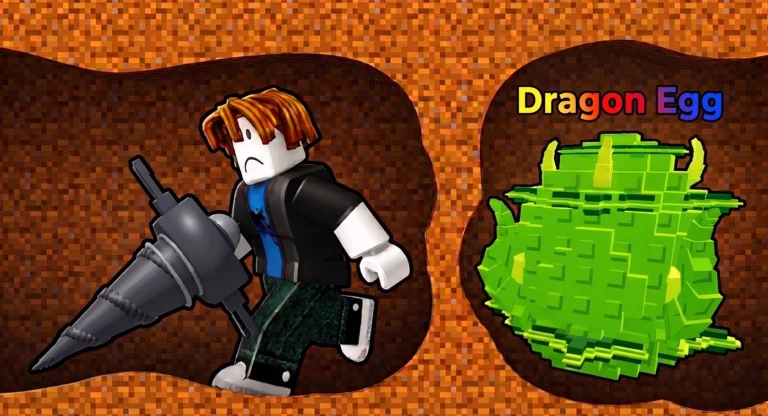
- Drill for Eggs runs on one repeatable loop: train Power, dig, grab an Egg, escape, hatch, earn Cash.
- Power first: a stronger drill reaches deeper Eggs faster and shortens dangerous trips.
- Animal Guards cause most failed runs on the return trip, not during digging.
- Hatched Animals generate Cash continuously, including offline earnings while you are away.
- Reinvest early Cash into drill upgrades before chasing deep, high-risk areas.
Understanding the Core Game Loop
Drill for Eggs, developed by Crazay Future on Roblox, is a drill-and-hatch simulator where progression comes from repeating a short cycle of actions. Every session, regardless of your level, follows the same structure: use your drill to build POWER, dig underground to find rare Eggs, avoid Animal Guards, bring Eggs back to your Farm, hatch them into Animals, and let those Animals generate Cash — even while you are offline.
New players often lose the most time by skipping steps in this loop, such as digging into deep areas before their Power can support a safe return. Master the loop first; optimize it later.
| Loop Stage | Action | Output |
|---|---|---|
| Train | Drill to build POWER | Higher digging efficiency |
| Dig | Move underground toward Eggs | Access to rarer Eggs |
| Escape | Avoid Animal Guards on the return | A secured Egg |
| Hatch | Place the Egg at the Farm | A new Animal |
| Earn | Animals produce Cash, online and offline | Upgrade funds |
The Egg is only valuable once it reaches your Farm. Treat every digging trip as a delivery mission, not an exploration mission.
Your First Session: Step-by-Step
Follow these six steps in order during your first session. Each step builds directly on the previous one, and completing the full cycle once unlocks your income engine.
Train Power
Start by drilling to raise your POWER. POWER determines how efficiently you break through terrain and how deep you can realistically dig. Build enough for your first trip before descending.
Drill Downward
Enter the digging area and move down through early underground zones. Stick to shallow depths at first — common Eggs are enough to start your Farm.
Collect an Egg
Once you reach an Egg, pick it up. From this moment, the Egg is your only objective. Skip side resources and detours.
Avoid Animal Guards
Animal Guards patrol the underground routes. Keep your distance, move toward your planned exit, and never take an unfamiliar shortcut while carrying an Egg.
Return to the Farm
Carry the Egg back to your Farm. The run only counts once the Egg arrives safely — a dropped Egg means the entire trip was wasted.
Hatch and Earn
Hatch the Egg into an Animal and place it on your Farm. Animals generate Cash over time, including offline earnings you can claim when you log back in.
Most new players fail after collecting the Egg, not before it. Always note your return path on the way down.
Surviving the Animal Guards
Animal Guards are the primary threat in Drill for Eggs, and they turn the return leg of every run into the most dangerous part of the game. Guards protect deeper underground areas, so the rarer the Egg you target, the more guard encounters you should expect.
Key survival rules:
- Plan before you dig. Identify the shortest known path back to safety before committing to an Egg.
- Never wander while carrying. Repeated direction changes and dead ends are how guards catch you.
- Use familiar passages. Open, well-known routes are safer than shortcuts that require extra digging.
- Retreat when a route keeps failing. If you lose Eggs repeatedly on one path, drop back to a safer area and upgrade your drill first.
| Situation | Do | Avoid |
|---|---|---|
| Before entering a guarded area | Confirm exit route and Power level | Diving deeper just because it is deeper |
| Guard begins chasing | Move straight to your planned exit | Stopping for extra resources |
| Route is blocked | Switch to a fallback path you know | Improvising new tunnels under pressure |
| Repeated losses on a route | Farm a safer area, then upgrade | Retrying the same route unchanged |
A deep Egg you lose on the way back is worth less than a shallow Egg you deliver. Match your target depth to your escape consistency.
Power, Drills, and Upgrade Priorities
POWER is the stat that gates your progression. Drilling raises it, and higher POWER means faster digging, access to deeper areas, and shorter exposure to guards. Upgrades should be evaluated against your current route, not purchased on impulse.
Early: Stay on Current Drill
- Use your starting drill until digging feels slow in your regular area
- Build a Cash reserve for future runs
- Learn routes instead of rushing upgrades
Mid: Next Practical Tier
- Upgrade when it clearly speeds up your current route
- Unlocks more rewarding Egg areas
- Buy only after checking the new Power actually changes your options
Late: Route-Opening Tier
- Save for a tier that unlocks a new depth
- Best for players who complete current routes consistently
- Prepare an escape plan before entering a new area
Cash spending priority for beginners:
| Priority | Spend On | Why |
|---|---|---|
| 1 | Drill Power upgrades | Directly improves every future run |
| 2 | Hatching more Animals | Builds recurring and offline Cash |
| 3 | Farm expansion | Supports more Animals generating income |
| 4 | Convenience upgrades | Useful, but never before the above |
Do not spend your entire Cash reserve on an upgrade. Always keep enough to support your next digging trip.
Building Stable Income and Farm Growth
Once your first Egg hatches, your Farm becomes a passive income engine. Animals keep producing Cash while you play and while you are offline, which means every successful delivery compounds your progress.
How beginner income stacks up:
| Income Source | Priority | Efficiency | Notes |
|---|---|---|---|
| Active Egg runs | High at start | Fastest way to unlock income | Repeat safe routes first |
| Hatched Animal income | Highest | Sustained progression | The core recurring Cash source |
| Offline earnings | High | Passive | Claim when you log in, reinvest immediately |
| Farm reinvestment | Medium | Improves future income | Fuels Power and safer runs |
Your weekly routine as a new player should look like this:
- Complete short, safe Egg runs rather than risky deep expeditions.
- Hatch every Egg you bring back and place Animals on the Farm.
- Claim offline earnings at the start of each session.
- Reinvest the majority of Cash into drill Power until deeper routes become reliable.
- Expand the Farm only when Animal income comfortably covers upgrades.
When your offline earnings alone can fund your next drill upgrade, your Farm has become self-sustaining — this is the moment the game shifts from grinding to compounding.
Beginner Milestones:
- Complete your first successful Egg delivery
- Hatch your first Animal on the Farm
- Claim your first offline earnings
- Purchase your first practical drill upgrade
- Complete five consecutive runs without losing an Egg
Beginner FAQ
Q: What should I do first in Drill for Eggs?
Train Power with your drill, then complete one shallow, low-risk Egg run. Deliver the Egg to your Farm, hatch it, and let the Animal start generating Cash. Do not chase deep areas before you can reliably escape them.
Q: Why do I keep losing Eggs?
Almost all lost Eggs happen on the return trip, usually to Animal Guards. Plan your exit route before picking up the Egg, avoid detours while carrying it, and retreat to safer areas if a route keeps failing.
Q: How does offline Cash work?
Animals on your Farm continue producing Cash while you are away from the game. When you log back in, claim your offline earnings and reinvest them into drill upgrades or Farm improvements.
Q: Should I upgrade my drill or expand my Farm first?
Early on, prioritize drill Power upgrades because they improve every future run. Once Animals are generating steady income, shift spending toward Farm expansion to grow your recurring and offline Cash.
Q: Are deeper Eggs always better for beginners?
No. The best route is the one you can complete repeatedly without losing Eggs. A shallow Egg delivered safely is worth more than a rare Egg dropped on the way back to the Farm.